Innovation and problem-solving: It’s at the heart of everything Helena Agri-Enterprises does, from crop inputs to the agronomic solutions making growers’ farming operations better. Almost 10 years ago, a pesky weed in Louisiana’s sugarcane country put those strengths to the test. What followed was a lesson in scientific discovery, collaboration and advocacy to ensure continued success of the sugarcane industry in the state.
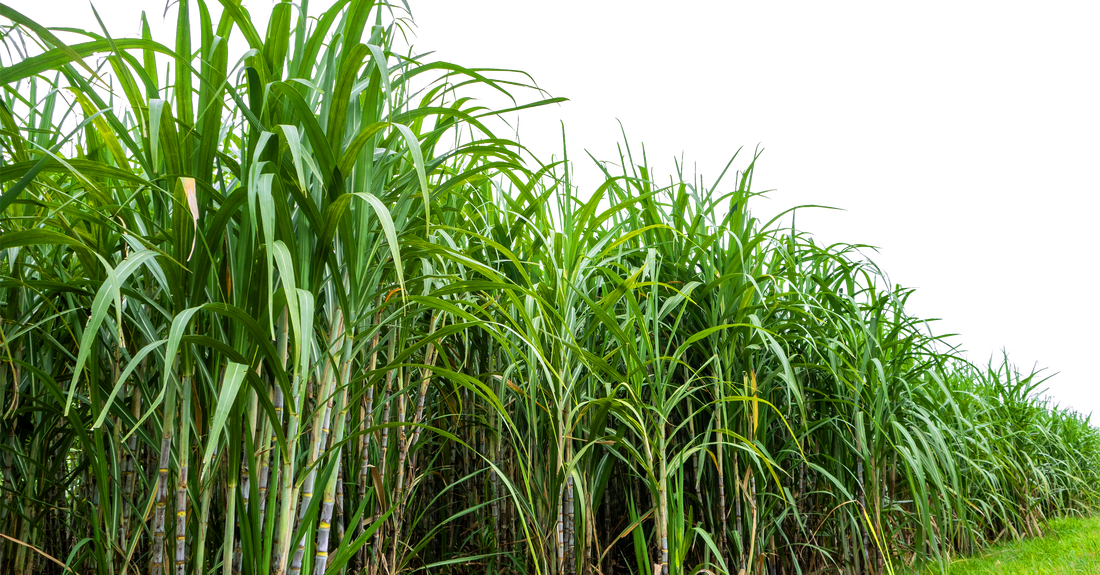
For sugarcane production in the United States, the state of Louisiana plays a vital role. Louisiana’s sugarcane industry is more than just a crop — it’s a legacy, deeply rooted in a rich agronomic history and at the forefront of the state’s crop production since the late 1700s. The row crop thrives in Louisiana due to the state’s abundant water supply and well-established infrastructure, growing in the triangle from New Orleans to west of Lafayette and north to Alexandria. The perennial crop is the economic backbone of the state, contributing $4.3 billion to the economy in 2024, according to the American Sugar Cane League. Growing the crop doesn’t come without its challenges, particularly in weed management.
In 2016, a mysterious weed thought to be Merrill’s nightshade, later identified as divine nightshade, started to appear on crops in Thibodaux. The weed was found near railroad tracks leading from the Port of New Orleans, suggesting a possible port of entry. When common herbicides weren’t effective, alarm bells started to ring.
Helena was one of the first on the ground to put together a plan to fight this weed, specifically Dr. Michael Kenty, Helena Product Specialist. Dr. Kenty recalls the situation and the phone call he got from a salesman out of Thibodaux.
“I got a call from Avery Sharp, who's one of our salesmen out of Thibodaux. He said, ‘I got a broadleaf weed that Latigo® is making mad. WeedMaster® makes it mad,” Dr. Kenty shares. “It's burnt, but it's still growing. And so, you’ve got to come look.”
After going to investigate this problematic weed, Helena got to work quickly with local agronomists, weed scientists and regulatory bodies to identify the weed and explore solutions. Working with the American Sugar Cane League, Louisiana State University AgCenter and the IR-4 Project, Helena began an extensive project to find a solution to combat this destructive weed.
Dr. Al Orgeron, former LSU AgCenter Sugar Cane Weed Scientist and current Resident Coordinator of the Sugar Research Station in St. Gabriel, worked with Dr. Kenty to identify the weed through genetic testing. To his surprise, the weed was divine nightshade, a species not previously documented in Louisiana.
At the heart of the response to divine nightshade was Trycera®, a special formulation of triclopyr herbicide from Helena that is remarkably effective against the invasive weed. Trycera is a selective broadleaf herbicide that offers outstanding control of broadleaf weeds and even some grasses. With Moveo® Formulation Technology, it improves efficacy by enhancing herbicide coverage and penetration and preventing mixing problems.
“We continue to see new weed control opportunities evolve with Trycera, even after more than 15 years of commercial sales. The uniqueness and flexibility of its formulation, coupled with unparalleled performance as a triclopyr product, have been the driving force behind its success for many years.”
Dr. Michael Cox, Herbicide Brand Manager
Recognizing the urgency of the situation and the potential damage to sugarcane crops across the state, the American Sugar Cane League and LSU AgCenter requested a Section 18 emergency exemption from the U.S. Environmental Protection Agency to use Trycera, an herbicide not yet labeled for sugarcane. Currently, Trycera is the only triclopyr product labeled for use in sugarcane.
“Normally, a Section 18 is for two weeks or two months,” says Dr. Kenty. “They gave us a quarantine emergency exemption label that was good from February 2017 to May 2020 — basically three years.”
With the Section 18 came certain requirements, kicking off years of residue trials and weed control efficacy studies in sugarcane. They began in 2014, when the exact weed species was still unknown. Targeting the nightshade from 4 to 24 inches tall, the use of Trycera provided effective weed control during the trials, with only 11% re-emergence of the problem weed.
The initiation of the trials jump-started the long road to full registration with the assistance of the IR-4 Project, the primary resource for facilitating registrations of pesticides for specialty crops and other minor uses. Crops with less acreage, like sugarcane, often lack enough sales potential to generate investments in new chemistry. However, the critical need to combat invasive insects, disease, weed and nematode pests in specialty crops remains. The IR-4 Project fills the gap, supporting hundreds of trials annually and contributing billions of dollars in annual gross product.
The sugarcane project was originally submitted in 2017, but no action was taken from that application. In 2018, the project was resubmitted, this time with letters of support from growers, consultants and researchers in multiple states. It initially received a D-rating, a bad rating, which was a wake-up call for the team. Determined to succeed, the team — dubbed the “Sugar Cartel” by the IR-4 program participants — rallied support from Corteva, Helena, the American Sugar Cane League, LSU AgCenter and consultants.
The Sugar Cartel, consisting of experts across the sugar industry, including Agronomist Herman Waguespack Jr. of the American Sugar Cane League, Dr. Michael Kenty of Helena, and Dr. Al Orgeron and Dr. Kenneth Gravois of the LSU AgCenter, began attending regional and national IR-4 meetings to champion the project. Through getting to know the people involved, learning the IR-4 system and lots of networking, the team experienced firsthand the lengthy process of getting a project approved.

“You have to champion your project, go to the regional meeting, go to the national meeting, get other people to vote on it — or else you won’t get your project approved."
Dr. Michael Cox, Herbicide Brand Manager
With determination and hard work, the project was approved in September 2018 and was initiated in 2019. In recent years, the team has shifted its focus to securing Section 3 registration and a supplemental label. This would allow for broader and more permanent use of Trycera in sugarcane production, granting less strict spray applications. The full label was granted March 21, 2024, a process seven years in the making. With less constrained application guidelines, the use of Trycera is evolving as growers begin to see how it can benefit their farming production.
“I think people are learning where it fits. Because the Section 18 restricted the use, you could only treat an acre that had divine nightshade. The difference between the Section 18 and the full label is that it can now be applied year-round and aerially,” says Dr. Kenty. “As growers start figuring out what it can do additionally on other weeds, it'll start seeing more and more use. Instead of using Latigo Bold over and over and over, they may go Latigo Bold this time and then Trycera later. As growers put it to work, they're going to see where it fits and where it doesn't fit.”
The fight against divine nightshade in Louisiana’s sugarcane fields is more than a story of weed control; it’s a story of innovation, collaboration and problem-solving. Helena didn’t just supply a product; it helped drive a solution that benefited the lives of growers. Trycera’s success is a testament to what’s possible when industry partners come together to invest in research, regulatory navigation and grower support. As the sugarcane industry has secured full registration and is expanding integrated weed management strategies, Helena’s commitment to solutions that perform and innovation that leads serves as a beacon of progress in the future of agriculture.