In agriculture, change rarely arrives quietly. It often comes layered with new terminology, new expectations and new responsibilities. As the 2026 growing season gets underway, one area drawing increased attention is the Endangered Species Act and how it intersects with crop protection, application practices and regulatory compliance.
“This legislation has been around since the early 1970s,” says Austin Anderson, Adjuvant Brand Manager with Helena Products Group.
“What’s new is the level of attention and enforcement we’re seeing today.” The renewed focus stems from recent legal actions highlighting gaps in how pesticide registrations were coordinated with the U.S. Fish and Wildlife Service. As a result, ESA considerations are now more clearly integrated into label language, bringing endangered species protection directly into application planning. The goal is to protect sensitive plants and animals by managing off-target movement through drift reduction, run-off control and erosion mitigation.
Much of this compliance framework is built around a mitigation point system. Depending on the product and geography, growers must meet a required number of points by implementing approved practices such as cover crops, grassed waterways, buffer areas or other conservation measures. Importantly, these requirements are not one-size-fits-all.
“It’s very granular. Field by field, farm by farm. What works in one location doesn’t necessarily apply in another.”
Austin Anderson, Adjuvant Brand Manager with Helena Products Group
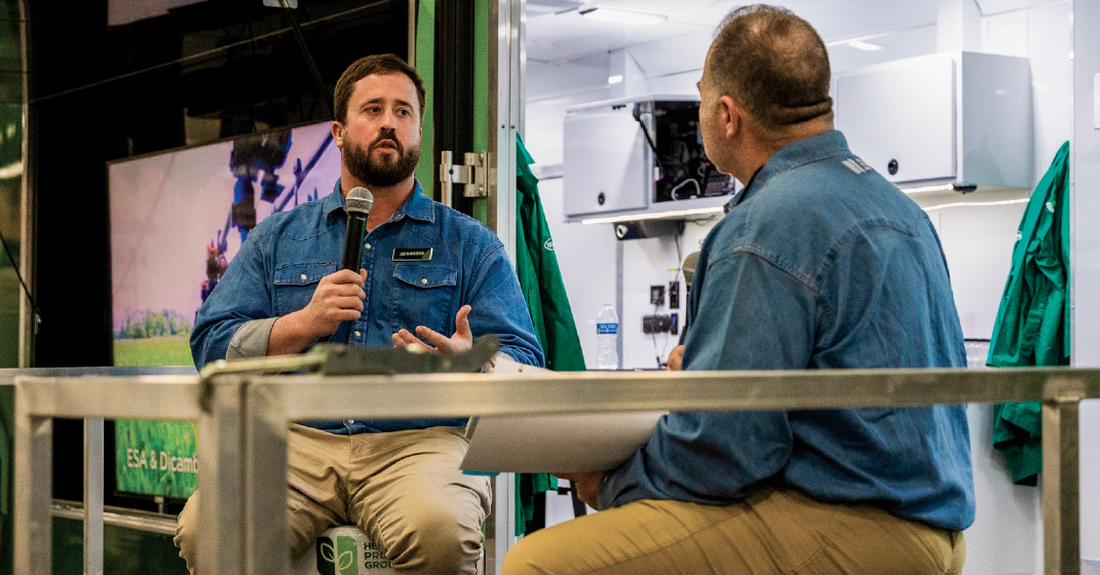
That level of detail places increased importance on communication and training as well as product development. Anderson says adjuvants will play a significant role in ESA compliance. As buffer zones and pesticide use limitation areas become more common, adjuvants help maintain efficacy while supporting compliance. Drift reduction technologies, in particular, are becoming critical tools for preserving operational flexibility.
“When I think about the role adjuvants play with the Endangered Species Act, it’s really about allowing our freedom to operate. Without those tools, buffer requirements alone could make some fields incredibly difficult to apply efficiently.”
Austin Anderson, Adjuvant Brand Manager with Helena Products Group
Looking ahead, dicamba regulations add another layer of complexity. While 2026 registrations keep dicamba available, they come with tighter restrictions, including reduced application rates, mandatory volatility reduction adjuvants, temperature thresholds and limits on how many acres can be sprayed in a single day. These requirements reinforce the need for careful planning and continued education.
“There’s just a lot of things to think about and a lot to consider,” says Anderson. “But at the end of the day, we’re thankful the tool is still there for growers who need it if we use it the right way.”
Anderson encourages anyone looking for clarity to start locally. Helena locations are well positioned to help growers stay informed as pesticide regulations change and ESA language expands across additional products in the coming years. The transition into this next phase of regulation is not about perfection. It’s about preparation. Contact your local Helena representative to ensure your crop protection program is ready for this season.