Northern regions are almost finished with soybeans, while corn is still in progress. Southern regions are wrapping up cotton and soybeans, but what comes next for growers? As harvest season winds down across the United States, growers are shifting their focus toward the next planting season.
In a recent episode of Helena’s “FieldLink Podcast,” seed specialists Bob Milholland and Garth Jenkins discussed the evolving seed landscape and why planning for 2026 genetics is more critical than ever.
Helena’s Future Plots system brings innovation to seed evaluation, showcasing leading-edge germplasm and technology from Helena’s preferred seed suppliers. These are not typical yield trials. Future Plots delivers real-world experience to reps and growers, allowing new varieties and hybrids to face varied conditions across multiple environments and maturities before they hit the market. There is power in seeing performance firsthand.
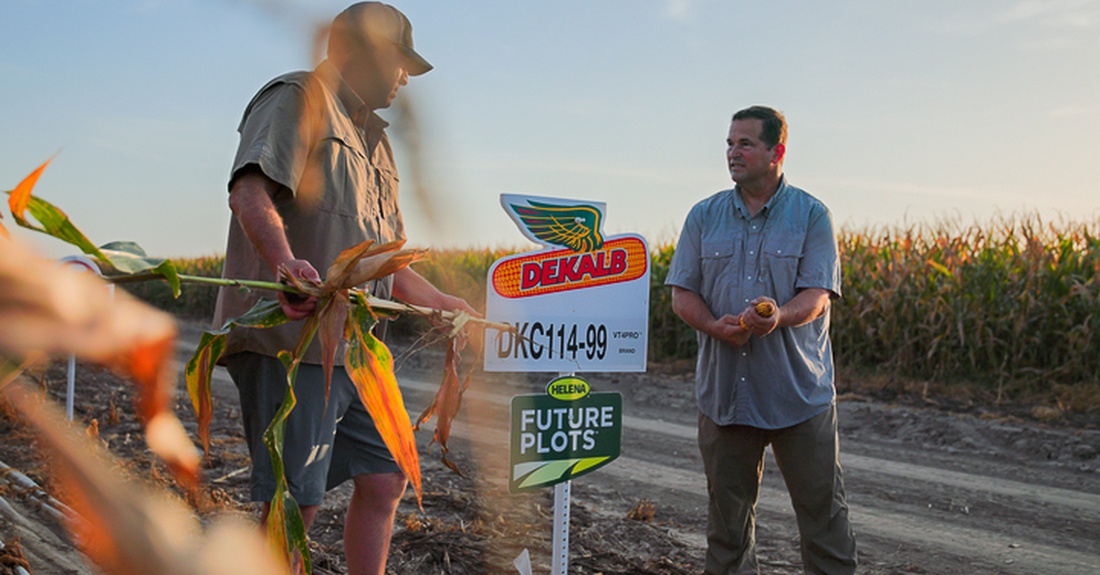
“It’s in-the-field training. Seeing is believing, and you can't describe something until you see it, and sometimes, it's an emotional moment. You see something bad, and that's bad, or you see something good, and that's really good.”
Bob Milholland, Helena Seed Specialist
Unlike traditional field trials focused solely on yield metrics, Future Plots emphasizes collaboration, learning and real-world evaluation. With every product tested being less than 2 years old, seeing them in the field earlier than competitors gives Helena a significant advantage — 25% more experience is huge for getting ahead of the curve.
“If you learn together, you come to the same conclusion together, and nobody's at odds,” says Milholland.
Helena seed specialists like Milholland and Jenkins aren’t evaluating these plots alone. They bring agronomic experts, supplier reps and growers into the field to see these new products in action, providing ample opportunities to discuss, learn and observe together. With Future Plots, Helena is building confidence in product knowledge while strengthening relationships with growers and seed partners.
“I think one of the biggest things we’ve noticed is the excitement between both the Helena personnel as well as some of our seed partners that we work with. They have been very supportive of this new direction that we're going in. I attribute a little bit of that to the fact that we all want to find the next big thing. And this kind of gives us a hand in that.”
Garth Jenkins, Helena Seed Specialist
The collaboration doesn’t stop there. Future Plots works with AGRIntelligence®, Helena’s data and precision technology platform, to provide growers with the most accurate and reliable recommendations. AGRIntelligence can assess conditions on their farm to help growers select the best genetics for their environment. While Future Plots sees the field, AGRIntelligence can see what is happening below the surface to explain the causes of issues above it.
Future Plots also provides insights into how new genetics perform under different environmental stressors. Jenkins and Milholland have found several key findings throughout 2025 that will be valuable as growers plan for next season:
- For soybeans, certain herbicide varieties showed no significant yield differences.
- Short corn is gaining interest for flexibility in spraying.
- Disease pressure was overall low, apart from findings of frogeye leaf spot in untreated beans.
- Excessive rainfall posed challenges for growers nationwide, but findings indicate differences in drain tolerance. The late drought this year tested stalk integrity.
With the rise of seed costs, shorter product life cycles and tighter inventory management, the seed industry is undergoing a major transformation to meet the needs of the evolving market. Growers can no longer wait until spring to make seed decisions; it is critical that these decisions are made meticulously and early. We’ve entered an age where managing seed inventory for our partners is an expensive proposition.
“We can't afford to do that these days. The biggest driver right now is that we’ve got to get these hybrids on order that growers think they might be interested in,” says Jenkins. “We can always make some changes here and there and tighten things up later, but if there's an interest in a product that looks like it's going to be pretty good coming out of these plots, I would say there's nothing to lose by going ahead and putting your name on some of that.”
Planning for 2026 starts now, and working with your Helena representative ensures you have what you need. Early conversations and decisions secure seed inventory, providing the best purchasing experience — including optimal financing options, reduced likelihood of inventory shortage and access to top-performing genetics. Build a plan tailored to your farm today. Don’t sit and wait — partner with Helena to set your farming operation up for success in 2026.
Contact your local Helena representative for more information on Future Plots. Hear additional insights on Future Plots and seed planning for 2026 from Milholland and Jenkins by tuning in to Episode 102 of the “FieldLink Podcast,” available on YouTube or wherever you listen.