
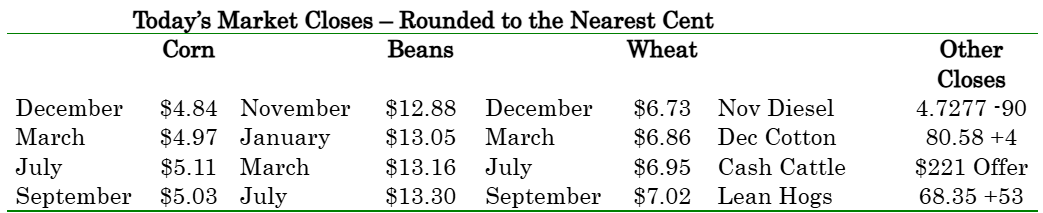
- Corn 1 ½ to 3 ¾ higher
- Soybeans 1 to 3 ¾ lower
- Wheat 1 to 1 ¾ higher
- Basis Flat/Higher
- Live Cattle 48 lower (226.58)
- Dow Jones 147 higher (52,073)
- Crude Oil 232 higher (94.17)
- Feeder Cattle 90 lower (341.05)
After Friday’s brutally bearish corn yield increase and subsequent price collapse, the new week started with more stability as the grains regained a modest amount of Friday’s losses while beans closed slightly lower. One factor that allowed for some price stability was the world grain and soy cash markets not following US prices lower as US basis levels rose to help offset some of the recent losses and keep grain coming into the pipeline where strong demand still exists. With no major reports due until the November USDA yield update, the bulls will have to search hard for world weather news and the return of Chinese demand to help their cause.
News and Notes:
- Hurricane Isaias tore through the southeast and Atlantic seaboard over the weekend but pulled away any extra moisture from the WCB and central Midwest to help quickly advance harvest. The majority of the Corn Belt and Midwest will remain dry and unusually warm for mid-October for the next 3-5-days to further advance harvest. S Brazil remains too wet, but the rest of the Brazil is seeing dry weather leading to a record planting pace for several key regions. Other world weather to watch as El Nino continues to strengthen is there has been no relief for Europe heading into the winter.
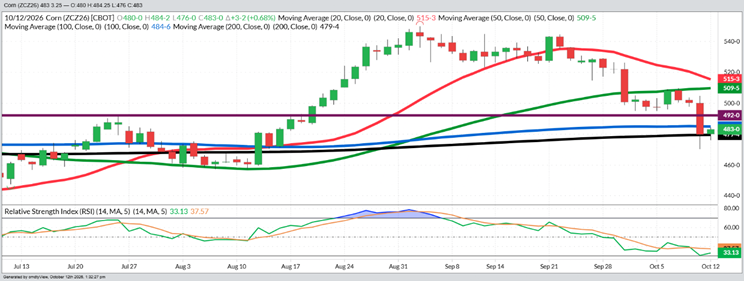
- The December daily corn chart is on Page 2 and shows the extensive technical damage done to the chart over the last 2-weeks. The best thing we can say now is that the 200-DMA (black line) held the daily close for the last two sessions. Other than that, the chart is pretty dismal. The funds have sold over 150,000 contracts (750 MBU) since the Quarterly Stocks and USDA report surprises but are still long over 1.2 BBU. The RSI is the most oversold since the contract low was made in late June, but that only sets up bounces and does not point toward a quick V-shaped rebound.
- The WCB had been an area of concern for national yield heading into Friday’s report, but the USDA’s head-scratching increases to several key WCB states, especially Nebraska. The USDA through higher a 1700 extra ears per acre from the September findings. That alone raised national yield 1.2 BPA. Other notable WCB yield increases were in the Dakotas, Kansas, and Texas. The report also highlighted that Ohio (200 BPA ), Iowa (219), Kentucky (193), and Tennessee (189) will all see new record state yields. New state record bean yields are expected in 8 of the largest planted acres states. Congratulations to all the farmers, scientists and agronomists who helped produce these new records in what was a very inconsistent growing season.
- President Trump’s diesel deal with Russia had only a short-term impact on prices, as a tentative energy infrastructure cease fire between Russian and Ukraine only last about 2-hours while more Iran backed attacks on Saudi Arabia are escalating the Middle tension even more. There is no end in sight for a normalization of gas and diesel prices, which will keep transportation costs for all products high.
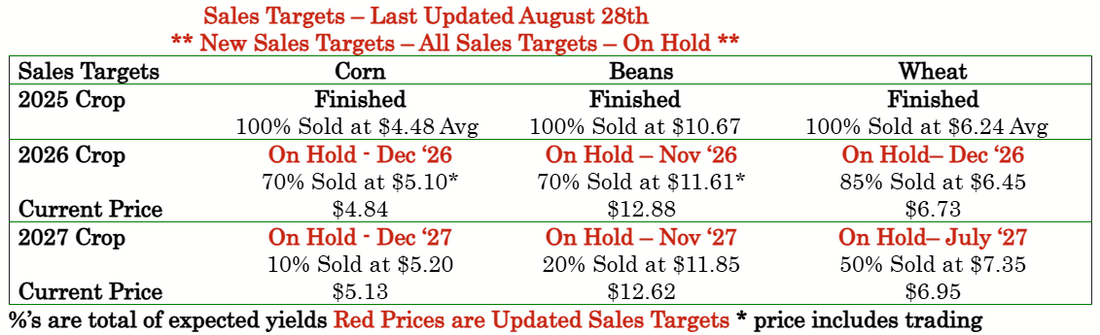
- The average fall insurance revenue prices are $4.96282 for corn and $12.88938 for beans.
Just when the farm community was beginning to have some confidence in the changes at the USDA that Sec Rollins and Kip Tom promised, the USDA simply could not help itself and rocked prices with two successive ultra-bearish reports to wipe out the August rally and end many farmers hopes for a profitable 2026. There are many great ideas on how to help smooth out the report reaction from ending fund and electronic trading (will not happen) to simply not putting out any weekly crop condition reports and no monthly yield updates until harvest is nearly complete. The US farmer deserves a better mechanism than what is in place and until our elected officials get serious about modernizing the USDA, we are at the mercy of a broken system.
Any decision to purchase or sell as a result of the opinions expressed in this report will be the full responsibility of the person authorizing such transaction. No market data or other information is warranted by Reliance Capital Markets II LLC as to completeness or accuracy, express or implied, and is subject to change without notice. Any comments or statements made herein do not necessarily reflect those of Reliance Capital Markets II LLC, or their respective subsidiaries, affiliates, officers or employees. Disclaimer: Past performance is not indicative of future results. Strategic Trading Advisors is a registered DBA of Reliance Capital Markets ll LLC.

About Jody Lawrence
Jody Lawrence has been in the commodity brokerage and agriculture marketing business since 1992 and started Strategic Trading Advisors in 1999 and runs it today with his son Brady. The daily market comment his company publishes has over 7000 subscribers in 33 states and 3 countries and provides a concise overview of the world markets with ideas on farm hedging and marketing. Jody also travels the country giving 60-70 marketing meetings a year through his 22-year strategic partnership with Helena Agri-Enterprises.

About Brady Lawrence
Brady Lawrence is an Agriculture Market Specialist and Financial Advisor that focuses on commodities markets, futures and options brokerage, and helping individuals and families plan for retirement and their financial futures. Brady joined Jody at Strategic Trading Advisors in 2018 after college and supports the market research and brokerage sides of the business.